
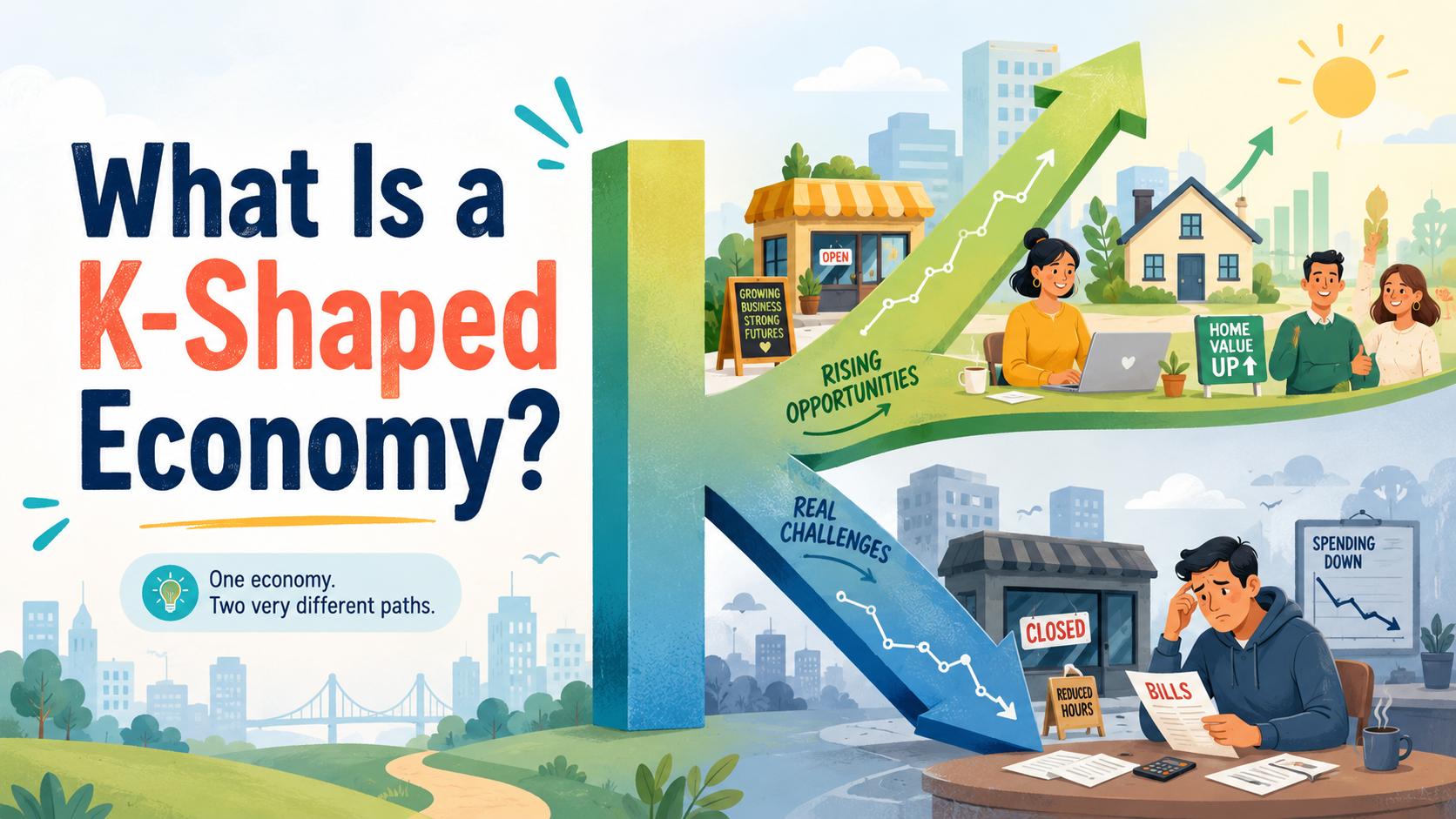
What is a K Shaped Economy?
The term "K-shaped economy" has been appearing more frequently in financial news lately, leaving many people wondering what it actually means and why it matters to investors. So, with that in mind, I wanted to share an overview of what a K-shaped economy is and what it could mean for your financial outlook.
1. What is a K-shaped economy? A K-shaped economy is one in which different groups experience vastly different financial conditions. After the same economic event, such as a recession or period of high inflation, one group experiences improving conditions while another faces greater challenges. The result is a widening gap in economic outcomes, resembling the two diverging arms of the letter "K."
2. Why has the term become more common recently? Recent economic data suggests that while many households have continued to increase spending, higher-income households have generally seen much stronger spending growth than lower- and middle-income households. At the same time, rising costs for everyday necessities have placed greater pressure on many families, with higher-income households better able to tolerate the higher costs of goods and services.
3. What is driving the divide? Several economic factors have contributed to this trend, including persistent inflation and higher energy costs. As fuel prices increase, those higher costs often ripple through the economy, affecting transportation, shipping, groceries, utilities, and other everyday expenses. While these rising costs impact everyone, they don't affect every household in the same way, contributing to different financial experiences across the economy.
4. What does this mean for investors? Economic headlines often describe broad trends, but they don't tell every individual's financial story. Two households can experience the same economy in very different ways, depending on their income, expenses, savings, investments, and long-term goals. That's why it's important to focus on your own financial plan rather than reacting to headlines alone.
5. How can you navigate a K-shaped economy? While no one can predict exactly how the economy will evolve, maintaining a long-term perspective remains one of the most effective strategies. Regularly reviewing your financial plan, maintaining a diversified portfolio, and ensuring your investments continue to align with your goals can help you stay focused through changing economic conditions.